Chase Bethea, a NYX award-winning and VGMO nominated freelance Composer/Technical Audio Designer for Video Games and a variety of other media, was raised in the Chicago area on music.
“I grew up listening to smooth jazz with my mom and my father…My father had bought me an alto saxophone when I was around the age of eight, or nine,” he said. “And I was transcribing some of the music from the radio. I didn't know about manuscript paper or sheet music. I didn't have it. So I was a student of letters and I would just copy it down.”
With a mind for music, Chase attended Cal State Northridge and Moorpark College where he studied Jazz musicianship five and six. This is where he was grateful to have a teacher who “really strengthened my jazz ear, and solidified it more, so that I could really lock into the feelings and the textures that I had always heard as a child.”
Bethea graduated with his AA from Audio Engineering from Los Angeles Recording School, his AA in Music Theory and Composition from Moorpark College and his BM in Media Composition from California State Northridge all with Honors. He has received many accolades throughout his career. In 2010, he won Best Music in Motion Graphic and Poetry Award. In 2013, Bethea’s score from the successful flash Horror game, “I Can’t Escape” (developed by Fancy Fish Games) received an honorable mention in the Indie Game Magazine. His second soundtrack for the game “Cubic Climber” earned a Noteworthy on Destructoid.com.
In 2016, Bethea was nominated for Artist of The Year – Independent Composer by VGMO in the entire industry. In 2021, he won an award for the AGROUND soundtrack for the NYX Game Awards. He scored Aztec Ride, a highly addictive fun mobile game that shipped on Google Play in October 2020 and was nominated for a Pocket Gamer Mobile Award. His music has been featured on multiple podcasts such as Pixelated Audio, Level with Emily, Sound of Play and Audio Modeling MDI Talk. Much of his discography can be heard on many streaming platforms such as Spotify, Pandora,YouTube, Deezer, Tidal, and Bandcamp.
Bethea’s signature sound continues to deliver alluring compositions and professional mixes to his clients and fans. A self-described “solutionist” Video Game Composer/Creative & Technical Audio Designer that has shipped over 20 titles in his young career, Bethea continues to compose and produce a diverse collection of music that is a fusion of texture and complexity that allows a player to become immersed in the experience. Chase Bethea is a NYX award-winning and VGMO nominated freelance Composer/Technical Audio Designer for Video Games and a variety of other Media.
GPU Audio recently sat down with Bethea to talk about what’s been going on in the world of video game music composition and technical audio design. This interview has been edited for length and clarity.
GPU Audio: We would love to hear a little bit about how you would characterize yourself as a Technical Audio designer and also what a technical audio designer actually does.
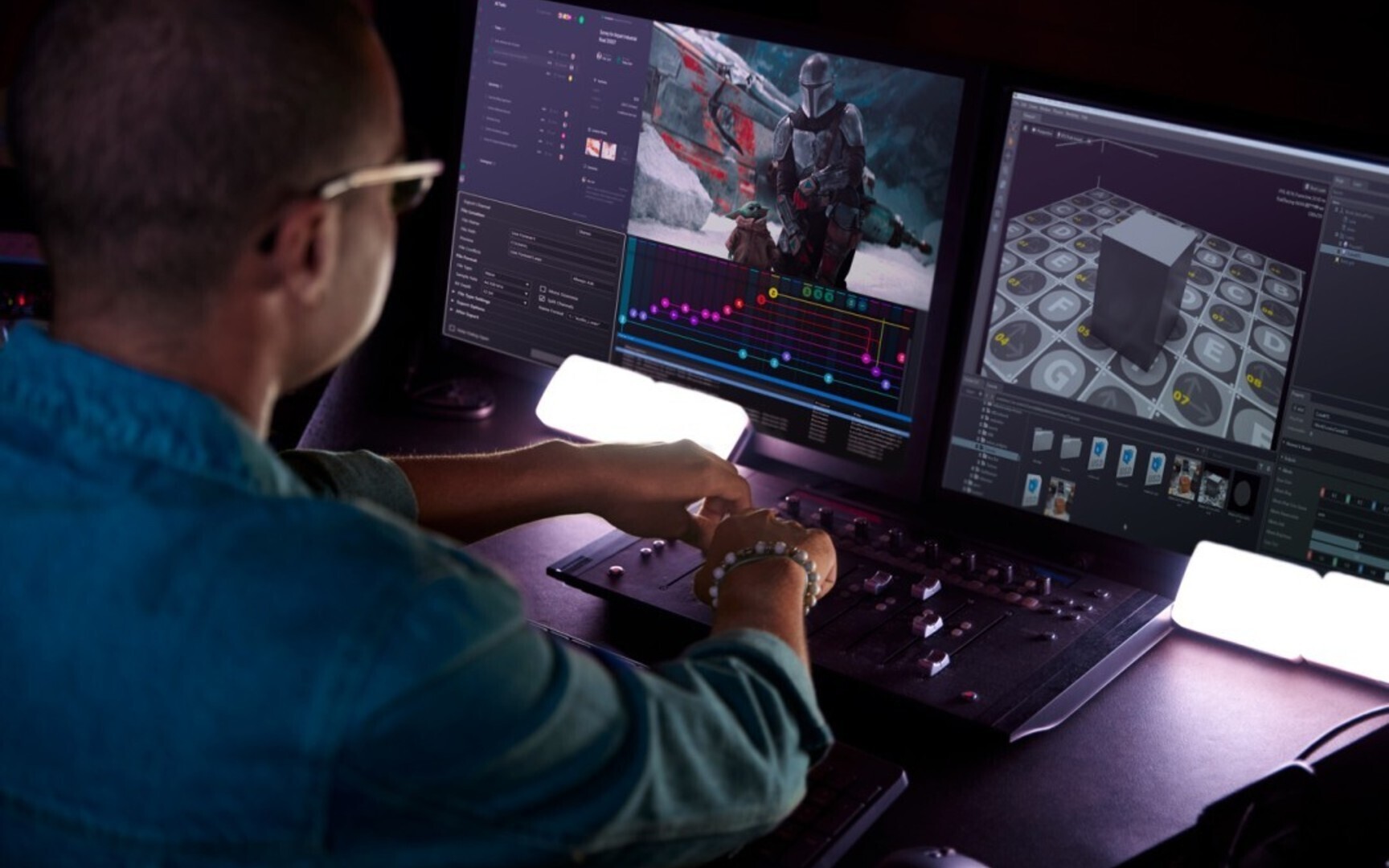
Bethea: A technical audio designer is actually someone that implements the sounds and the music into the game. I am the hybrid of that, because I compose the music and I do music design. I work with audio middleware tools. First of all, audio middleware is a software that talks to the music creation software, such as Ableton, Cubase FL Studio, and talks to the game engines, like Dough, Unity, Unreal. So it's a bridge software that converts this to music stuff, but we're also going to make it work within the game engine. A technical audio designer takes those things from the music part or the sound design part and then implements it directly. Because I'm hybrid, and specifically focus on video game composition, I'm doing the music design within the actual music software itself and then I utilize an audio middleware tool. I prefer Elias. I am able to do a dynamic music design with transitions and systems that will align to the player mechanics that make the experience more immersive, and more interactive in the sense for the player at the end.
GPU Audio: I assume you're using all different types of production tools, like DAWs, different setups and technologies and softwares that would be specific for composing for gaming, or certain things that you like to use that might be outside of that for your creative process.
Bethea: For production tools, we are using Cubase, a new Windows software made by Steinberg. I find it to be the best to make those interactive scores, because I'm able to do a pre-concept of understanding how it's going to work before it actually gets into the audio middleware, and before it actually gets into the engine. There's 11 of them. I chose mine to be Elias, but anyone can use any other type. It worked with NUENDO. There is another one made by a Japanese company called CRI Middleware. Those tools help facilitate the sounds and the music within the engine while working together.
So you could already be in sync with how the workflow could be. Technically you don't have to have both of them open if you don't need to. But you should just make sure that they are copacetic in the sense of working with the game engine in the States for whatever the player mechanics or states that may be within the world.
The additive process actually starts within me. I have to visually see and understand what the game is asking for before I can ask the technology to do it. Because sometimes what I realize is that my vision is not completely realized before I actually put it there. So if I want something to work with an audio middleware or if I actually want something to work with a music production thing, it can't do it. That's what I've been running into right now and I find a workaround, because I consider myself a solution. I've been more in line with talking to the software developers and saying, ‘hey, I really need to unlock the mix meter. I work with different odd time signatures, how come we can't do this? Why can we do that when I'm writing this tool that you've already done? How is it possible that we can do this and do that?
GPU Audio: What do you feel is really lacking in video game composition? What are you trying to change?
Bethea: I'm trying to change how people perceive video game music. My path has been a little bit difficult because I'm doing that in a different way. I used to watch Mad Men and my favorite line from Mad Men is, ‘if you don't like what's being talked about, change the conversation.’ So I flipped it to say, ‘if you don't like what's being heard, right, do something different.’ That's innate with me and to the sound. A lot of people are hung up on like, there's no melodies and there's no this and that's okay. You have a lot of games that come out – the industry is close to 70 years old and there's a lot of melodies and things that have come out from there. What I'm pushing for is a different way of listening with texture, sound counter melodies that are mostly in the forefront that work together with the melodies, because it's all stuff that we learned in music school. It's about how it's just listening differently and feeling different time signatures at the same time. The same is true for the same time sheets, three, four and six, eight. Don't get me wrong, I still use those in the right context. Everyone is so familiar with copying what's been done before instead of finding their own voice sooner.
With the right research and the right listening experiences, these things can be used for game audio, video and competition will grow a lot more. Because a lot of things have already been accomplished, like music production. It's great off the top, but what about the music? It sounds good. And if you remember it, that's great, it's long lasting. But where are the chills in your body from that? Whereas the ones that are so much ear candy, that you really need to hear multiple times a week? I'm not hearing a variety of different musical sound palettes, like how we used to hear when there were limitations within the game audio consoles, or the video game consoles with the chipsets. It's interesting to see where it will go. I'm happy to be the pioneer if that's what it takes.
Check out Chase’s work on his website, SoundCloud, and YouTube. Subscribe to his videos and/or follow him on Twitter (@chasebethea).